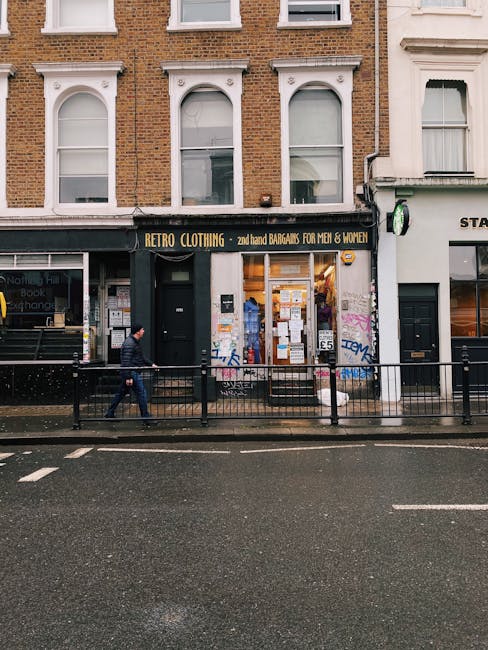
Local Business Moves: Shops and Offices in Primrose Hill
Moving a shop or office in Primrose Hill sounds straightforward until you are the one juggling keys, stock, desks, delivery windows, and a street that may not give you much room to breathe. Local Business Moves: Shops and Offices in Primrose Hill are often less about brute force and more about timing, access, planning, and keeping day-to-day trade from grinding to a halt. That is the real challenge. You want the move done properly, without turning a normal working week into a small crisis.
In this guide, we will look at how business relocations in Primrose Hill actually work, what makes them different from standard domestic moves, and how to reduce disruption whether you run a compact retail unit, a professional office, or a mixed-use premises. Along the way, you will find practical tips, common mistakes, a useful comparison table, and a realistic checklist you can use before move day. Let's face it, a well-run move is usually the one nobody really notices.
Why Local Business Moves: Shops and Offices in Primrose Hill Matters
Primrose Hill is one of those London areas where location does a lot of heavy lifting for a business. A shopfront near passing foot traffic, a quiet professional office tucked behind the main roads, or a small studio space all depend on smooth operations. If a move goes badly, the cost is not just the van fee. It can show up as lost trading hours, missed appointments, staff frustration, stock damage, or a very awkward first week in the new place.
That is why local business moving deserves a more careful approach than many people expect. Shops have stock, shelving, point-of-sale equipment, fixtures, packaging, and sometimes refrigeration or specialist displays. Offices have desks, chairs, monitors, archives, IT equipment, meeting-room furniture, and often a lot of cables that seem to multiply overnight. You know the sort. One drawer full of leads, another full of mystery adapters, and somehow nobody owns the printer.
Primrose Hill also brings practical local considerations. Parking can be tight, access may be limited, and some streets are better suited to smaller vehicles or staggered loading. If you are moving in or out at busy times, even a short delay can ripple through the day. So the move itself matters, yes, but the preparation matters even more.
Expert summary: The best Primrose Hill business moves are not the fastest on paper. They are the ones that protect trading, avoid access problems, and make reopening feel calm rather than chaotic.
How Local Business Moves: Shops and Offices in Primrose Hill Works
A good business move is usually a sequence, not a single event. The process begins with a survey of what needs moving, what needs dismantling, and what needs special handling. From there, the plan should cover timing, vehicle access, packing, protection, loading order, and setup at the destination.
For a shop move, the order often follows trading priorities. You may need to clear the back office first, then stockroom items, then display stock, and finally front-of-house fixtures. For an office, the priority is often different. IT equipment and documents may be packed separately, with the most important workstations set up first so staff can get back online quickly. In both cases, the aim is continuity. Not perfection. Continuity.
Most local moves in this area are helped by smaller, flexible vehicles, especially where streets are narrow or loading space is limited. A larger moving truck is not always the smartest option if it cannot park near the entrance. Sometimes a smaller removal van, used efficiently with multiple runs or a staged load plan, is the better choice. That is one reason many businesses look at commercial moves and tailored office removals rather than a one-size-fits-all service.
Good movers will usually talk through practical details like lift access, staircase width, fragile items, loading bays, and the safest route between the building and vehicle. If that sounds obvious, fair enough - but in real life, those "obvious" details are what save the day.
Key Benefits and Practical Advantages
When handled well, a local shop or office move can do more than just change address. It can improve layout, reduce clutter, make staff movement easier, and create a cleaner start for the next phase of the business. That is especially useful if your current premises feel cramped or inefficient.
- Less trading disruption: A structured move limits downtime and helps you reopen faster.
- Better protection for stock and equipment: Proper packing and handling reduce breakages, scratches, and avoidable losses.
- Improved organisation: Labelled items and a clear setup plan make unpacking less messy.
- Stronger local continuity: Staying within Primrose Hill or nearby areas can keep your customer base intact.
- Lower stress for staff: People work better when they know what is happening and when.
- More predictable costs: Detailed planning helps prevent last-minute add-ons and delay charges.
There is also a subtle business benefit that gets overlooked: confidence. A tidy move makes your team feel that the business is in control. That matters. People notice when the whole thing seems handled, even if they never say so.
Who This Is For and When It Makes Sense
This kind of move is relevant for a wide range of local businesses, from independent retailers to small professional teams. It can make sense when your lease is ending, your space is no longer fit for purpose, your business has outgrown the site, or you simply need a more practical layout.
It is also relevant if you are moving between short-term workspaces. Primrose Hill and the surrounding London area often support businesses that operate in flexible, transitional ways - a pop-up retail setup, a small office team, a consultancy, a studio, or a practice that needs occasional relocation support. In that situation, you may need office relocation services that can handle both timing and equipment care.
It makes sense when:
- you need to move outside trading hours or over a weekend
- you have bulky, awkward, or delicate items
- your premises are access-sensitive, with stairs or narrow entrances
- you want help with packing, transport, and reassembly
- you need to relocate quickly but still keep a professional standard
If you are only moving a handful of items, a lighter service may be enough. If you are shifting a full retail floor or a busy office, though, it is usually worth treating the move as a project rather than a simple collection. Two very different things, really.
Step-by-Step Guidance
The most reliable moves are built around clear stages. Here is a practical way to approach it.
1. Audit what needs to move
Start with a room-by-room or zone-by-zone list. In a shop, separate stock, fixtures, packaging, tills, signage, and back-office items. In an office, separate desks, chairs, monitors, files, storage units, kitchen items, and anything needing specialist handling.
2. Decide what should be moved, stored, or removed
Not everything deserves a place in the new premises. A move is a useful moment to clear dead stock, broken furniture, obsolete tech, and paperwork you no longer need. If you are moving bulky items that will not go with you, a service like furniture pick up can help reduce clutter before the move date.
3. Check access at both locations
Measure doorways, hallways, stairs, and lifts. Confirm parking or loading options. If your move involves a street with limited stopping space, plan around that early. In Primrose Hill, access is often the difference between a smooth job and a complicated one.
4. Create a moving timetable
Work backwards from your reopening date. Build in time for packing, transport, setup, and any delays. If you are closing the business for a day, make sure customers, suppliers, and staff know well in advance.
5. Pack by function, not by convenience
That means keeping related items together. For example, one box for reception supplies, one for printer consumables, one for customer paperwork, one for display accessories. For office moves, it is often smart to keep one department or team together so unpacking is less chaotic.
6. Label clearly and consistently
Labels should tell movers where each item goes and whether it is fragile, confidential, or top priority. A simple colour code can work well. Nothing fancy. Just readable.
7. Move the essentials first
At the destination, set up the items needed to function: internet equipment, payment systems, key files, basic furniture, and core stock. A business can survive a lot, but it cannot do much without its essentials.
8. Test and tidy
Once the main items are in place, check access routes, power connections, and whether anything needs adjusting. A small bit of post-move tidying can save a lot of irritation later. You will usually notice the forgotten cable only after the tea has been made.
Expert Tips for Better Results
The difference between a tolerable move and a genuinely good one often comes down to detail. Here are a few practical habits that make a real difference.
- Move the least used items first: Archive boxes, spare stock, and non-essential furniture can go early, reducing pressure on the final day.
- Keep a "day one" kit separate: Include chargers, keys, cleaning cloths, tape, pens, and critical documents.
- Protect corners and surfaces: Shopfitting and office furniture can pick up marks very easily in tight hallways.
- Take photos before dismantling: A quick phone picture of shelving or desk layouts helps with reassembly later.
- Brief staff clearly: If people know their role, there is far less wandering about asking where the kettle went.
- Choose realistic time windows: Early morning or off-peak slots are often better for local business moves than trying to squeeze everything into a busy midday window.
One small but useful tip: keep a simple written plan on paper as well as on your phone. Batteries die. Paper does not. A bit old-school, maybe, but handy when you need it.
If your move involves fragile items, specialist display pieces, or heavier furniture, it is also worth checking whether your chosen removals provider has suitable handling equipment and insurance cover. That extra step can prevent a lot of unpleasant surprises later on.
Common Mistakes to Avoid
People tend to make the same few mistakes with shop and office moves, and they are usually avoidable.
- Underestimating access problems: Narrow roads, tight corners, stairs, and limited parking can turn a simple job into a bottleneck.
- Packing everything at the last minute: That is how labels disappear and essential items get buried.
- Failing to plan for IT: Office moves often stall because cables, routers, and chargers were not separated properly.
- Leaving stock counts until after the move: It is much harder to spot missing items once everything is mixed together.
- Not telling staff what to do: If everybody is "helping", sometimes nobody is helping. Odd, but true.
- Choosing the wrong vehicle size: Too large and you may struggle with access; too small and the job drags on longer than expected.
Another common issue is forgetting the reopening sequence. Which team starts first? Which desk is essential? Which stock needs to be visible immediately? A move that ignores those questions can feel finished, but still not be functional.
Tools, Resources and Recommendations
You do not need fancy systems to manage a business move well, but a few basic tools can make a big difference.
- Inventory sheet: A simple spreadsheet or checklist to track what is moving.
- Colour-coded labels: Useful for directing boxes and furniture to the right zone.
- Tool kit: Screwdrivers, tape, cable ties, scissors, marker pens, and a small torch.
- Protective materials: Blankets, wraps, covers, and sturdy boxes for fragile or valuable items.
- Contact list: Keep supplier details, building contacts, and key staff numbers in one place.
- Quote comparison notes: When evaluating suppliers, compare what is included, not just the headline price.
For businesses looking for a local moving partner, it can help to review pages such as removal services, man with van, or removals near me to understand the available service types and what suits your scale of move. If you need help with preparation as well as transport, packing and unpacking services can reduce the load on your team quite a bit.
It is also sensible to look at the provider's practical policies. Health and safety, insurance, payment security, and complaints handling may not sound exciting, but they matter when a move is time-sensitive. A decent operator should be able to explain how they handle those basics without making a meal of it.
Law, Compliance, Standards, or Best Practice
For business moves, compliance is usually less about one dramatic rule and more about getting a range of practical duties right. That includes safe handling, responsible parking and loading, sensible site access, and care with confidential materials.
If you are moving office records, customer files, or sensitive business information, data protection and confidentiality should be taken seriously. Paperwork should not be left visible or mixed casually with general contents. Likewise, if a premises has health and safety concerns, such as stairs, trip hazards, or heavy lifting, the moving plan should reflect that. A provider's health and safety policy and insurance and safety information can give you a better sense of how carefully they work.
Environmental best practice matters too. Many businesses now try to reduce waste by reusing boxes, recycling suitable packing materials, and disposing of unwanted furniture responsibly. That is where recycling and sustainability comes into the conversation. It is not just a nice-to-have. It is part of running a sensible move.
If you are comparing suppliers, also look at transparency around pricing, payment, and terms. A clear quote process is usually a sign of a more reliable operator. You do not need a thousand-page contract. You do need to know what is included, what is extra, and what happens if plans shift slightly on the day. London moves rarely go by the script, after all.
Options, Methods, or Comparison Table
Not every move needs the same approach. The right method depends on the size of the premises, the volume of contents, and the level of disruption you can tolerate.
| Approach | Best for | Strengths | Watch-outs |
|---|---|---|---|
| Small van move | Compact shops, small offices, light equipment | Flexible access, easier parking, quick local runs | May need multiple trips if the load is larger than expected |
| Full removal van service | Medium-sized business relocations | Better for mixed furniture and stock, more structured handling | Access planning becomes more important |
| Commercial move with packing support | Busy retail units and offices with sensitive items | Less pressure on staff, better for complex packing and setup | Usually needs more lead time and coordination |
| Phased move | Businesses that cannot fully shut down | Reduces downtime and spreads disruption | Requires very clear scheduling and space management |
For many Primrose Hill businesses, the smartest option is not the biggest one. It is the one that balances access, speed, and disruption. Sometimes a tighter, more agile move wins out. Sometimes a bigger planned operation is the safer bet. The right answer depends on your premises, not on a generic template.
Case Study or Real-World Example
Consider a small design office moving a short distance within the Primrose Hill area. The team has desks, two shelving units, boxed samples, monitors, a printer, and a modest archive. They cannot afford a full day offline, but they also do not want staff carrying boxes down three flights of stairs while trying to answer client emails.
So the move is broken into stages. Non-essential storage goes first. Then the workstations are packed by person and labelled clearly. The IT equipment is separated and kept together. The move is scheduled for late afternoon into early evening, which gives enough time to unload and reassemble the most important desks before the next morning.
The result is not glamorous. No one is applauding. But it works. Clients can still reach the team, the important gear arrives safely, and the office is functioning again without the kind of chaos that leads to missing monitors or a week of "where did we put that cable?"
A retail example is similar, though with a different shape. A shop might decide to close one afternoon, move display stock and fixtures in a sequence, and reopen once the essential setup is complete. The biggest win is usually not speed alone; it is not having to rebuild the whole business from scratch after dark.
Practical Checklist
Use this as a simple pre-move check. It is not fancy, but it is useful.
- Confirm the moving date and time window
- Check access, parking, lift use, and stair routes
- Count and categorise stock, furniture, and equipment
- Separate fragile, confidential, and high-priority items
- Label boxes and furniture clearly
- Back up important digital files before moving devices
- Prepare keys, access codes, and contact details
- Arrange protection for floors, doors, and corners if needed
- Set aside a day-one essentials kit
- Tell staff, customers, and suppliers about the move schedule
- Check insurance, timing, and any special handling needs
- Plan setup order for the new premises
Quick reassurance: if your checklist is not perfect, that is fine. The goal is not perfection. The goal is fewer surprises and a calmer first day in the new space.
Conclusion
Local Business Moves: Shops and Offices in Primrose Hill work best when they are treated as practical projects, not just transport jobs. The local streets, access limits, and business continuity pressures all add up. But with the right planning, clear labels, realistic timing, and a moving team that understands commercial work, the process can be far more manageable than it first appears.
The strongest moves are the ones that protect your stock, keep your staff informed, and let you reopen without drama. That is the real goal. Not a perfect day. Just a good one.
Get a free quote today and see how much you can save.
If you are planning a move soon, start early, keep the essentials close, and choose a setup that fits your premises rather than forcing your premises to fit the move. Little decisions make a big difference here, honestly. And once the dust settles, it feels good to know it was handled well.
Frequently Asked Questions
How far in advance should I arrange a shop or office move in Primrose Hill?
For a straightforward local move, a few weeks of lead time is usually more comfortable than leaving it to the last minute. If you have bulky items, access constraints, or a busy trading schedule, earlier is better. The more planning you do, the less likely you are to get caught out by parking, packing, or setup issues.
What is the biggest difference between a shop move and an office move?
Shops are usually more stock- and display-led, while offices are more dependent on equipment, files, and fast reinstatement of workstations. A shop often needs careful fixture handling. An office often needs more attention to IT, cables, and the sequence of getting people back to work.
Can a small local move still need professional help?
Absolutely. Even a small move can become awkward if access is tight or if you are dealing with fragile, heavy, or valuable items. Professional help can be especially useful when you want to avoid disrupting the working day or risk damaging equipment.
How do I reduce downtime during a business relocation?
Move in stages, pack by function, keep day-one essentials separate, and choose a time window that suits the business rather than just the van. Off-peak or out-of-hours moves can often help, though the best timing depends on your premises and local access.
What should I do with unwanted furniture or stock before the move?
Decide early what is worth moving and what is not. Unwanted items can be sold, reused, recycled, or removed separately. Clearing them before the move usually saves time, space, and a fair bit of frustration on the day.
Do I need to pack office files separately from general items?
Yes, ideally. Confidential files, archived records, and important documents should be separated and clearly labelled. That makes handling safer and makes it easier to restore order once you arrive at the new premises.
What if my building has stairs or narrow access?
Then access planning becomes one of the most important parts of the move. Measure carefully, warn your moving provider in advance, and consider whether smaller loads or more flexible vehicle access would work better. A quick walk-through before the move can save a lot of trouble.
How do I know which moving service is right for my business?
Match the service to the scale and complexity of your move. A small load may suit a flexible van-based service, while a full office relocation may need packing support, dismantling, and more structured coordination. If in doubt, ask for a quote that explains what is included.
Is insurance important for commercial removals?
Yes. You want to know how items are covered during loading, transport, and unloading. Insurance does not remove every risk, but it is a basic part of choosing a provider with proper standards and sensible procedures.
Can packing and unpacking services really make a difference?
They can, especially for busy teams or moves with lots of small items. Packing support can reduce pressure on staff and help keep things organised. Unpacking support can also speed up the return to normal working conditions, which is often the part people appreciate most.
What is the most common mistake businesses make during local moves?
The most common mistake is underestimating how much time and coordination the move needs. People often focus on transport and overlook access, labelling, setup order, and the basics of keeping the business functioning. That is where problems tend to appear.
How can I prepare my team for moving day?
Give people clear roles, deadlines, and packing instructions. Tell them what is happening, what they are responsible for, and what should not be touched without agreement. A short briefing before the move can prevent a lot of confusion. And yes, it usually saves a few sighs too.